
Welcome to Yin Venice Yoga

Yoga is the journey of the self, through the self, to the self.

– The Bhagavad Gita –
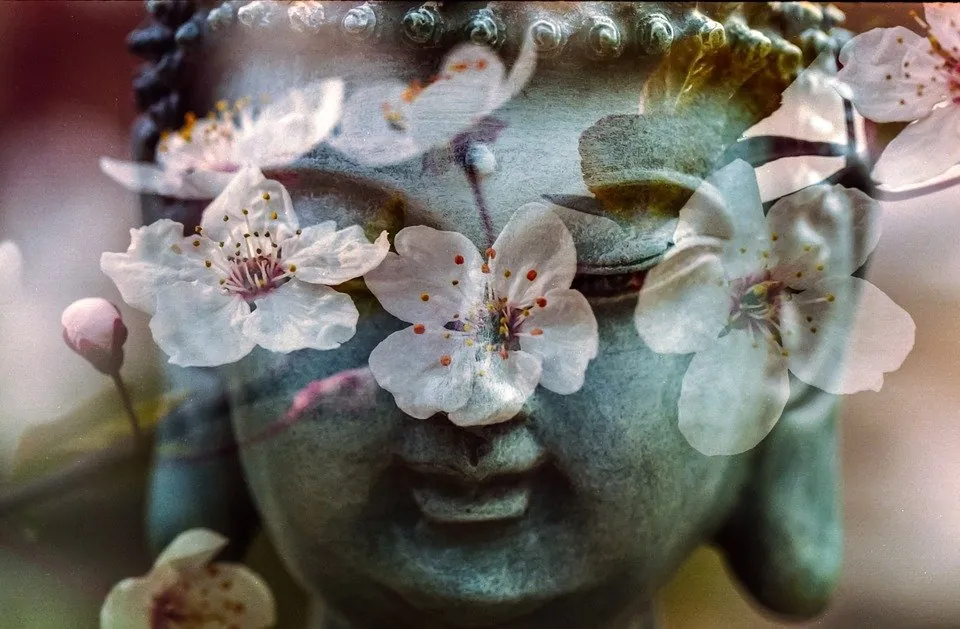
A weathered stone Buddha face framed by white spring blossoms.
A woman seated cross-legged, arms lifted overhead in a yoga practice.
A woman seated in meditation with her hands resting in a mudra.

Yin yoga is a meditative yoga practice that promotes mindful movement. Through the attentive perception of one’s breath and focusing attention on it, and on one’s body, mental training begins which in yoga is the practice of concentration; meditation techniques will result in a natural path that involves the human being in its entirety as a “mind-body unit”.

The positions proposed by the practice of Yin yoga are functional to individual peculiarities: there is no perfect position that must be won. Each person finds his or her ideal position, as achieved by listening to and knowing the capabilities and possibilities of one’s body at a given moment: the present moment.

Yin Yoga

The equilibrium of the universe in everyday life through the bodily stillness and dynamism

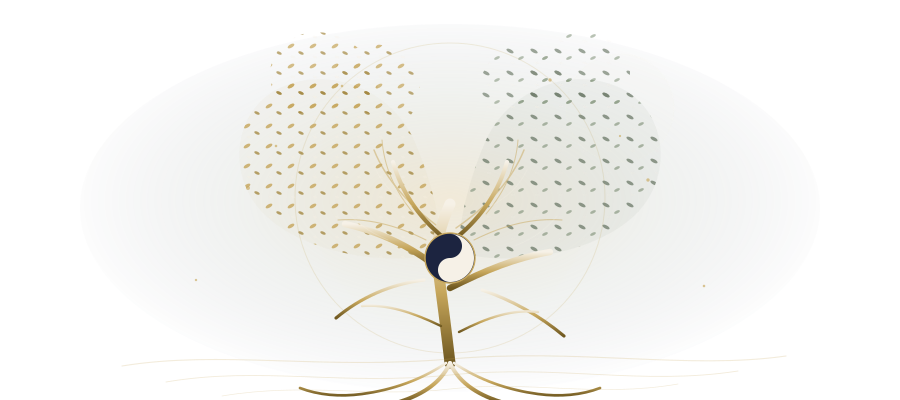
Yin Yoga is based on the Taoist concepts of yin and yang:

Yin

Yin is the feminine principle, intuition, depth, immobility. The moon is considered yin.

In the Yin sequences, the positions are passively held immobile for a few minutes, facilitating a positive stimulation of the deep connective tissue (tendons, ligaments, fascia, bones) favoring the maintenance and improvement of body flexibility. On an energetic level, Yin Yoga acts on the meridian system allowing to unblock energy stagnations, favoring its natural flow. In the Yin practice immobility and silence are emphasized, resulting in a deeply relaxing experience: by holding the positions for a long time, passively, at the rhythm of a slow, conscious and deep breathing, it is possible to release tensions, also increasing awareness and understanding of the connection between body and mind.
Yang

Yang is the masculine principle, reason, height, mobility. The sun is considered yang.

Working with the body, Yang practice involves positions that develop and increase our muscle strength and power, thus focusing on muscles and joint stability.

This practice expresses the alternation of opposites and their incorporation into each other

Props (bricks, bolsters, blankets) can be used to facilitate the maintenance of the Āsana, which usually varies from one to five minutes.

A soft sunrise breaking through clouds.

The one who controlled the soul with yoga Becomes like a pure crystal Similar in a certain way to a ray of the sun

– The Bhagavad Gita –

……a bit of history

Tao yoga

Yin yoga develops from Tao yoga: the ancient Taoist martial arts practices also included a series of positions performed mainly on the ground, sitting or lying down, held for a long time to develop flexibility.

1970s — Paulie Zink

Brought to the West in the 1970s by Paulie Zink (martial arts champion), whose Taoist practices performed and taught included āsana yin (sitting or lying postures), āsana yang (more dynamic and strenuous postures), Taoist flow (set of yin and yang practiced with movements characterized by fluidity and circularity), together with breathing techniques and a strong reference to Taoist alchemy, probably based on the theory of the five elements which is also used by Traditional Chinese Medicine (TCM).

Late 1980s — Paul Grilley and Sarah Powers

Yin yoga was further implemented, from the end of the 80s, by one of Zink’s students, Paul Grilley and subsequently by Sarah Powers, who contributed – respectively – to emphasize the anatomical aspects and the physiology of the meridians; introduce the specific target of the positions in reference to the meridians, and Buddhist psychology.

Sleeping Swan

Maria Teresa holding the Sleeping Swan yin yoga pose on a mat outdoors.
Benefits
  • favors the opening of the hips.
  • allows for a nice stretch of the hip flexors and quadriceps on the side of the outstretched leg.
  • lengthens the spine.
Contraindications
if you have severe knee and hip joint problems.
Meridians and Organs Affected
liver, kidney, stomach, spleen, gallbladder and urinary bladder line.
Recommended position holding times
One to three minutes
Portrait of Maria Teresa Castellan.

About Me

Maria Teresa Castellan, BS (Hons)

Graduated in Sport and Exercise Sciences, Kinesiologist, yoga and meditation Teacher

info@yinveniceyoga.com

Get In Touch

info@yinveniceyoga.com